The digital marketing landscape isn't just shifting; it’s being rewritten. As we move through 2026, the "search bar" is no longer a place where users type keywords and hope for the best. It’s a place where they have nuanced, multi-turn conversations.
With OpenAI officially rolling out ad testing for free and "Go" tier users earlier this year, the industry is bracing for the biggest disruption since the dawn of Google Ads. Here is how ChatGPT is set to redefine your digital campaigns in 2026.
1. From Keywords to "Conversational Intent"
In the old days (way back in 2024), we targeted keywords like "best running shoes." In 2026, ChatGPT will allow advertisers to target intent.
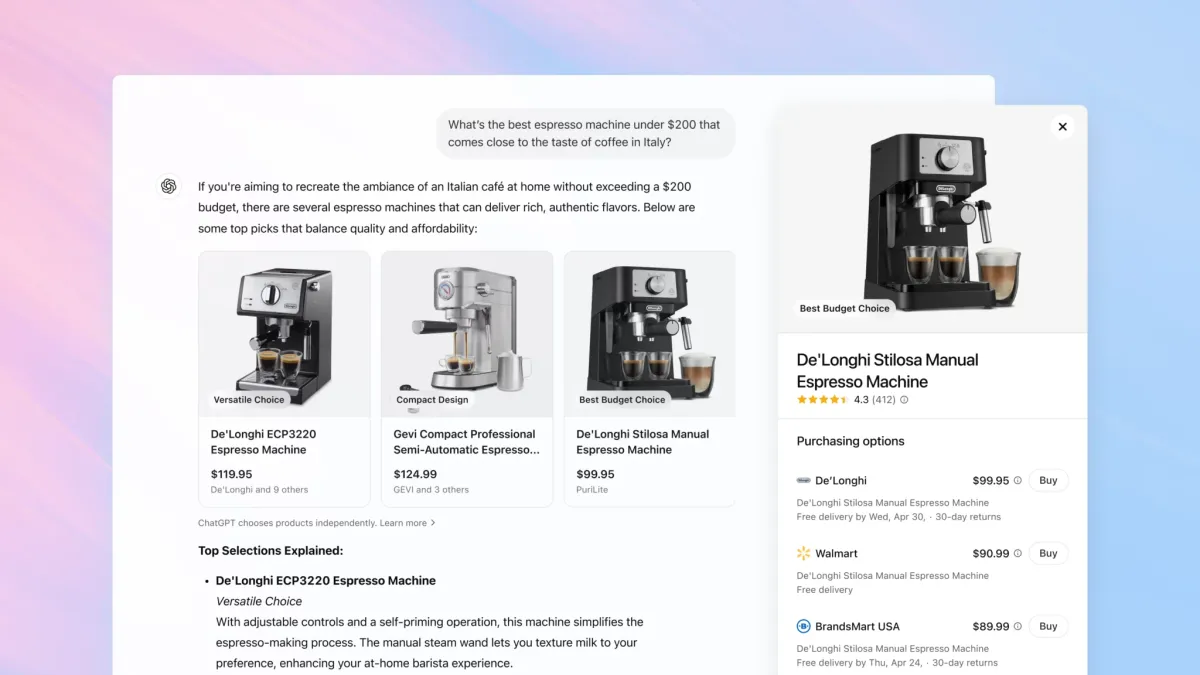
When a user asks, "I’m training for my first 10k in London, and my knees have started aching. What should I do?", ChatGPT doesn't just show a banner. It provides advice on recovery and subtly integrates a Sponsored Suggestion for a local physiotherapy clinic or a specific line of joint-support footwear. This is "Zero-Click" advertising where the value is delivered inside the chat, making the ad feel like a helpful recommendation rather than an interruption.
2. The Rise of Sponsored Answers
OpenAI has been clear: "Answer Independence" is a priority. However, the introduction of bottom-of-answer placements has changed the game. Brands are now bidding for the "Recommended Next Step" slot.
- The Format: A clearly labelled sponsored box appearing after a helpful AI response.
- The Pricing: Early reports suggest high-value placements are fetching CPMs (cost per thousand impressions) of around £45–£50, reflecting the high-intent nature of these users.
3. Hyper-Personalisation at Scale
By 2026, the "one-size-fits-all" ad creative is a relic. Marketers are using ChatGPT’s API to generate dynamic ad variations in real-time. If a user is known to prefer eco-friendly products, the AI automatically tweaks the ad copy to highlight sustainability. If they’re a bargain hunter, it leads with the discount. We are seeing campaigns with thousands of individualised headlines, all managed by AI agents that optimise for conversion while you sleep.
4. Direct In-Chat Conversions
The bridge between "discovery" and "purchase" has finally vanished. 2026 is the year of Conversational Commerce. Users can now ask an ad questions: "Does this subscription include international roaming?" or "Can I get this delivered by Tuesday?" The ad is no longer a static image; it’s a mini-chatbot. Once the user is satisfied, they can complete the checkout process via integrated payment protocols without ever leaving the ChatGPT interface.
5. "Generative Engine Optimisation" (GEO)
Just as SEO dominated the 2010s, GEO is the buzzword of 2026. Brands are shifting budgets toward creating "AI-friendly" content hubs. If your brand isn't mentioned in the data sets or real-time web searches that ChatGPT uses to form its answers, you don't exist. Digital ad campaigns now include "Entity Building" as a core pillar to ensure the AI views your brand as a trusted authority.
Frequently Asked Questions
1. Will ChatGPT ads be annoying like traditional pop-ups?
OpenAI's current framework focuses on "Mission Alignment," meaning ads are designed to be useful and non-intrusive. Most 2026 formats appear at the bottom of a response or as a "sponsored suggestion" that fits the context of your query.
2. Can I opt out of seeing ads on ChatGPT?
Yes. In 2026, OpenAI maintains an ad-free experience for "Plus," "Team," and "Enterprise" subscribers. Only the free tier and the lower-cost "Go" tier currently feature sponsored content.
3. How is my privacy protected with ChatGPT advertising?
OpenAI has stated that while ads are based on the current conversation's context, they do not sell personal chat histories to advertisers. Conversational data is used to find a relevant match, but your identity remains shielded.
4. What is the "Cost Per Answer" (CPA) model?
Some agencies are experimenting with a "Cost Per Answer" model, where advertisers pay only when their brand is successfully recommended as part of a helpful AI response, ensuring higher quality than a simple impression.
5. How do I make sure ChatGPT recommends my brand?
This requires a strategy called Generative Engine Optimisation (GEO). You need to publish high-authority, structured data and "how-to" guides that the AI can easily parse and credit as a reliable source.