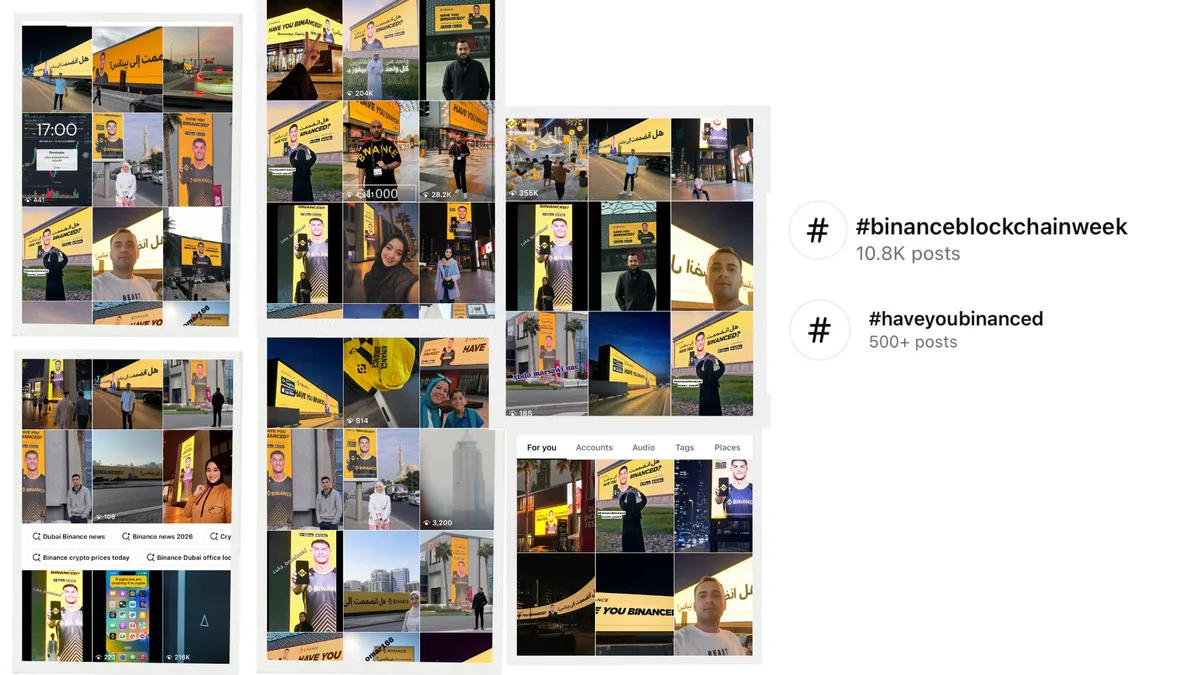
In the modern marketing ecosystem, Out-of-Home (OOH) advertising and social media are no longer separate departments; they are two sides of the same coin. This "Synergy Loop" is transforming how global brands exist in the public consciousness, moving beyond simple impressions to create cultural moments.
Here is an exploration of how these media influence each other and, more importantly, why brands must be exceptionally mindful when navigating this intersection.
1. OOH as the "Authenticity Anchor" for Social
In an era of AI-generated content and digital fatigue, social media often suffers from a trust deficit. OOH influences social media by providing physical proof. When a brand's message appears on a massive billboard in Tokyo or a transit wrap in London, it gains a level of "public legitimacy." On social media, this translates into higher engagement because the brand feels "real" and established rather than just another fleeting, intangible digital ad.
2. Social Media as the OOH "Magnifier"
OOH is historically a local medium, but social media makes it global. A single clever installation can influence millions of people who will never physically walk past it.
- The FOMO Effect: High-impact "spectaculars" such as 3D anamorphic billboards are designed specifically to be filmed. This influences social feeds by creating "must-see" content that users share organically to boost their own social standing.
- Real-Time Feedback: Social media serves as a live focus group for OOH. Brands can see instantly which headlines are being photographed and which are being ignored, influencing future creative rotations in real-time.
3. Priming the Digital Click
OOH influences the psychology of the scroll. Studies in consumer behaviour suggest that people are significantly more likely to engage with a brand on their mobile device if they have been "primed" by a physical ad in the real world first. The physical world builds the "mental availability," and the social feed provides the "conversion point."
Why Brands Must Be Mindful
Simply occupying both spaces isn't enough; brands must be mindful of the unique dynamics of each.
The "Contextual Creep" Risk
Global brands must be mindful that OOH is a public broadcast, while social media is often a curated, private feed. A joke or "meme" that works within a niche digital community might feel offensive, confusing, or tone-deaf when plastered on a 40-foot billboard in a culturally diverse city. Brands must ensure their "public voice" and "social voice" are harmonised without being jarring.
The Fragmented Journey
If your OOH ad promises a specific aesthetic but your social media landing page feels corporate and disconnected, you break the "Influence Loop." Consumers expect a seamless visual transition. Brands must be mindful that the visual bridge, including colours, fonts, and tone, remains unbroken between the street and the screen.
The "Unblockable" Responsibility
Unlike a social ad, you cannot scroll past a physical billboard. This "forced exposure" means brands have a social responsibility to contribute positively to the urban environment. Mindful brands use OOH to provide utility or joy, which then earns them the right to show up in a user’s personal social feed later.
Frequently Asked Questions
1. Does OOH influence my social media algorithm?
Indirectly, yes. When people search for your brand or engage with your posts after seeing a billboard, social platforms register that high-intent activity. This signals to the algorithm that your content is relevant, potentially increasing your organic reach.
2. Why should a "digital-only" brand care about OOH?
Digital-native brands use OOH to move from being "an app on a phone" to "a part of the culture." It provides a physical footprint that makes the brand feel more permanent and trustworthy to global audiences.
3. Can social media trends dictate OOH content?
Absolutely. With Digital OOH (DOOH), brands can take trending topics or viral user comments and display them on physical screens within minutes. This makes the physical world feel as reactive as the digital one.
4. What is the biggest mistake brands make in this loop?
Using OOH just to repeat a social media ad. OOH should be the "hook" or the "spectacle," while social media should be the "conversation." They should complement, not replicate, one another.
5. Is the influence of OOH on social media measurable?
Yes. Brands track "Social Lift" by measuring the spike in branded searches and social mentions in specific geographic areas where OOH campaigns are active.